
Protein Modification Reagents

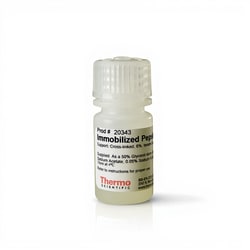
Thermo Scientific™ Immobilized Pepsin (Agarose Resin)
Generate and purify Fab and F(ab')2 fragments from antibodies with acidic endopeptidase (pepsin) immobilized onto beaded agarose resin.


Thermo Scientific™ Pierce™ Sulfo-NHS-Acetate
Amine-reactive (NHS ester) compound to permanently block primary amines (e.g., protein lysine side chains) to prevent interactions or later conjugation.
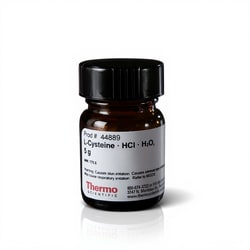
Thermo Scientific™ Pierce™ Cysteine-HCl
Make sulfhydryl assay standards or perform protein refolding experiments using this pure, crystalline cysteine hydrochloride (Cys-HCl).

Thermo Scientific™ Pierce™ Premium Grade TCEP-HCl
Optimize applications where product integrity and risk minimization are paramount with our highest quality formulation of this disulfide reducing agent.

Thermo Scientific™ Pierce™ Traut's Reagent (2-iminothiolane)
2-Iminothiolane-HCl (CAS 4781-83-3); an amine-reactive thiolation reagent to cap protein primary amines with sulfhydryl groups for immediate crosslinking.

Thermo Scientific™ MA(PEG)12 Methyl-PEG-Amine Compound
MA(PEG)n: methyl- and amine-capped polyethylene glycol compounds containing 4 to 24 PEG units; use for surface-modification and molecule-pegylation applications.

Thermo Scientific™ Pierce™ TCEP-HCl, No-Weigh™ Format
Reduce protein and peptide disulfide bonds using this thiol-free, pure, crystalline tris (2-carboxyethyl) phosphine hydrochloride, TCEP (CAS 5961-85-3).

Thermo Scientific™ Pierce™ SATA (N-succinimidyl S-acetylthioacetate)
Short (2.8A), amine-reactive (NHS ester) sulfhydryl-addition reagent; creates stable (protected yet exposable) -SH group for protein crosslinking strategies.

Thermo Scientific™ MA(PEG)8 Methyl-PEG-Amine Compound
MA(PEG)n: methyl- and amine-capped polyethylene glycol compounds containing 4 to 24 PEG units; use for surface-modification and molecule-pegylation applications.

Thermo Scientific™ MA(PEG)4 Methyl-PEG-Amine Compound
MA(PEG)n: methyl- and amine-capped polyethylene glycol compounds containing 4 to 24 PEG units; use for surface-modification and molecule-pegylation applications.

Thermo Scientific™ MA(PEG)24 Methyl-PEG-Amine Compound
MA(PEG)n: methyl- and amine-capped polyethylene glycol compounds containing 4 to 24 PEG units; use for surface-modification and molecule-pegylation applications.

Thermo Scientific™ Pierce™ Mercaptoethylamine-HCl
Pure, crystalline 2-aminoethanethiol (2-MEA-HCl, also called cysteamine-HCl), CAS 156-57-0; selectively reduces antibody hinge-region disulfide bonds.

Thermo Scientific™ Pierce™ DTT (Dithiothreitol), No-Weigh™ Format
Thermo Scientific™ Pierce™ DTT (Dithiothreitol) No-Weigh™ Format is designed for convenient preparation of stocks that will be added to protein samples for effective reduction of disulfide bonds.
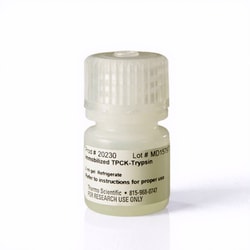
Thermo Scientific™ Immobilized Trypsin, TPCK Treated (Agarose Resin)
Cleave the carboxyl-side of Arg and Lys residues with trypsin that isTPCK-treated to block chymotrypsin activity; its immobilized form allows enzyme removal after digestion.

Thermo Scientific™ Pierce™ Hydroxylamine-HCl
NH2OH (CAS 7803-49-8) to cleave Asn-Gly peptide bonds or deprotect sulfhydryls following S-acetylthioacetate modification with SATA reagent.
- 1
- 2