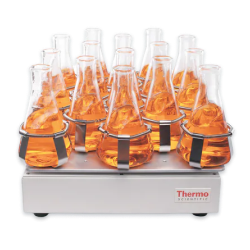
Orbital Shakers
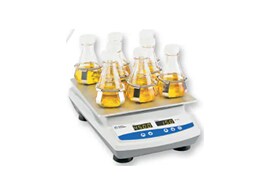
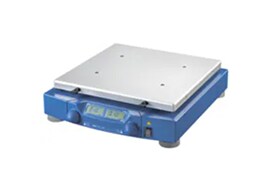
An orbital shaker is a laboratory instrument used to mix, blend, and agitate samples in a variety of containers such as flasks, bottles, and tubes. Orbital shakers typically feature a platform on which the container is placed and a motorized arm which moves the container in an orbital pattern. This motion allows for thorough mixing of the solution without the need for manual stirring.

Useful Links
Selector Guide
Save Now - Exclusive Deals

Product Code 10795714

Product Code 15712337

Product Code 10429692

Product Code 16514622

Product Code 17921282

Product Code 17791278
Complete Your Order - Great Deals



Must Have


Product Code 12994025
.jpg-650.jpg)
Product Code 11481038

Product Code 10304491
FAQ
An orbital shaker provides controlled, circular motion to mix or agitate samples in flasks, dishes, or tubes. The platform moves in a uniform circular orbit (typically 3–50 mm in diameter), creating gentle yet consistent mixing without vortex formation or shear stress. This makes orbital shakers ideal for cell culture, solubility testing, bacterial or yeast growth, and sample incubation. The shaking motion ensures even distribution of nutrients, gases, or reagents, promoting homogeneous conditions across all vessels.
Three main parameters determine mixing efficiency and sample compatibility:
• Speed range (rpm): Low-speed models (20–300 rpm) suit gentle mixing or tissue culture, while high-speed units (up to 500 rpm or more) promote rapid solubilization and cell suspension.
• Orbit diameter: A larger orbit (25–50 mm) provides vigorous mixing for large flasks, while a small orbit (3–10 mm) is ideal for microplates or small-volume containers requiring delicate motion.
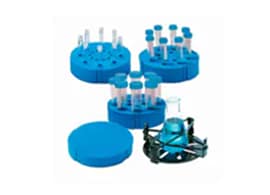
• Platform type: Modular platforms with clamps, sticky mats, or universal trays accommodate different vessel types. Advanced units feature programmable motion profiles and digital PID speed control to maintain constant agitation even under varying loads.
Modern orbital shakers integrate a range of features to enhance reproducibility, longevity, and safety:
• Temperature and CO₂ compatibility for incubated models used in cell culture or bioreactor applications.
• Microprocessor-controlled acceleration and anti-spill start-up to protect fragile samples.
• Over-speed and imbalance detection systems that automatically halt motion to prevent equipment or sample damage.
• Maintenance-free brushless DC motors for quiet, long-term operation.
For regulated environments, look for models offering data logging, user authentication, and GLP/GMP-compliant traceability, ensuring validated and auditable shaking conditions.
Top Brands